
SCALABLE CAPACITY
Our heat recovery units are designed to handle a wide range of exhaust air, flue gas and process gas flow volumes. The unit size and internal arrangement are selected to maintain suitable gas velocity, heat transfer performance and pressure drop across the expected operating range.
MATCHED DESIGN
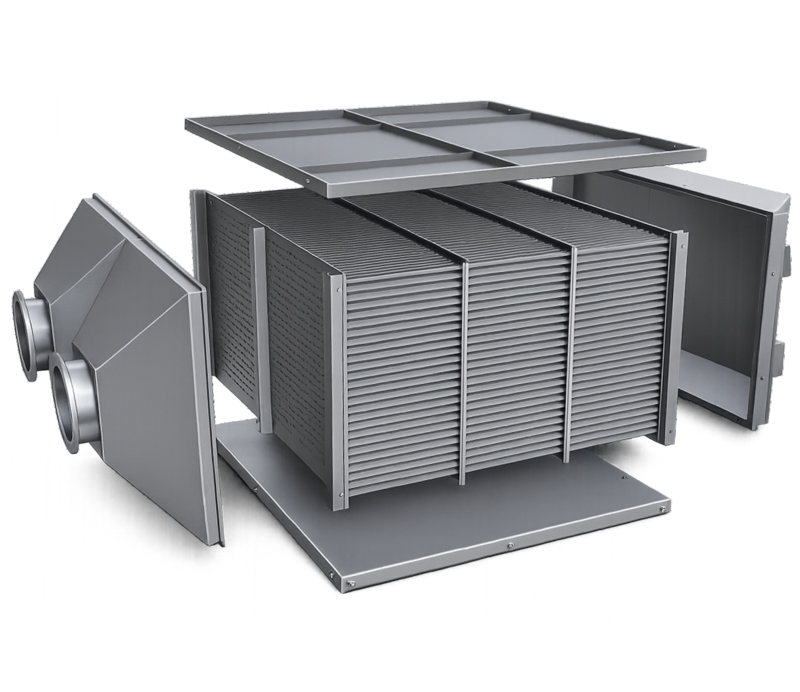
Each heat recovery unit is engineered to match the customer’s process conditions and installation requirements. The design is selected according to temperature profile, medium composition, flow volume, pressure drop limits and operating mode, including dry or condensing applications. Depending on gas cleanliness, fouling risk and cleaning requirements, finned or plain tube systems can be selected. Carbon steel or stainless steel versions, casing and connection arrangements, vertical, horizontal or combined layouts, and suitable condensate drainage for condensing operation are available for integration into new or existing plants.
INVESTMENT RETURN
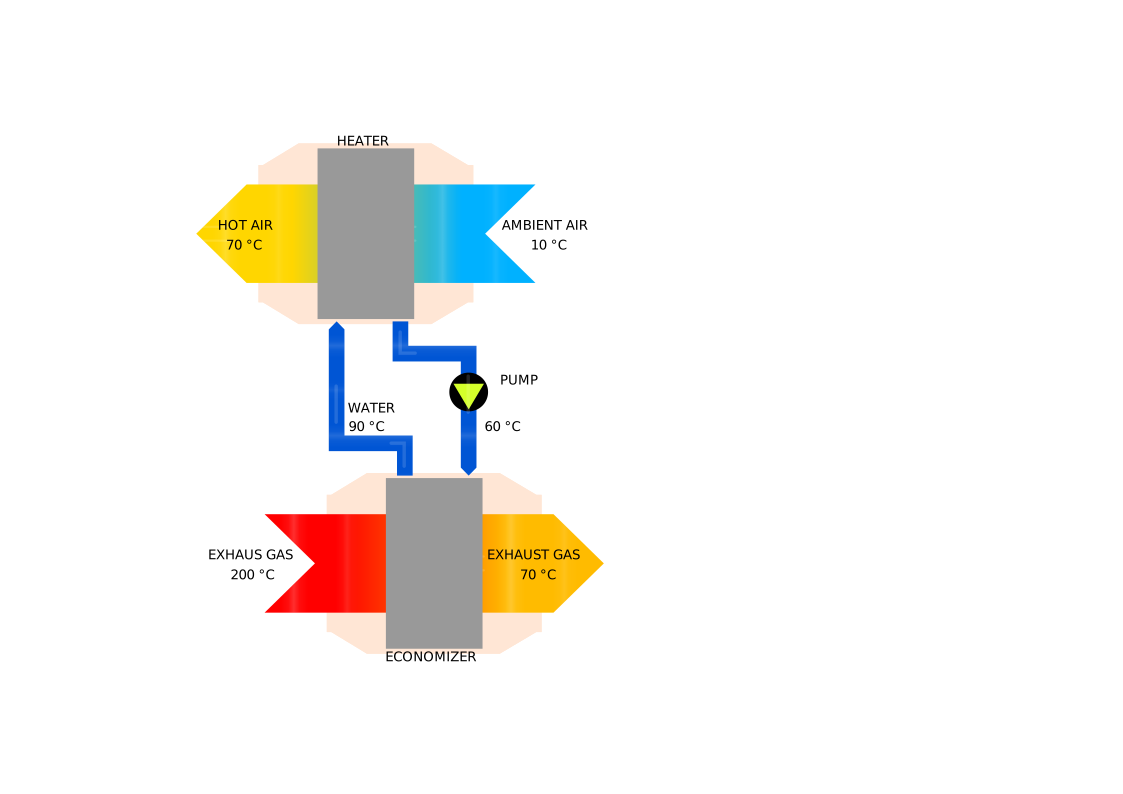
By recovering otherwise wasted heat from exhaust air, flue gases or process gas streams and transferring it back into the process, economizers improve overall energy efficiency and reduce operating costs. This creates both economic and environmental benefits by lowering primary energy demand and making better use of residual thermal energy. Flexible and scalable configurations can also reduce engineering effort, shorten lead times and support a faster payback period.
GAS-TO-GAS RECUPERATION
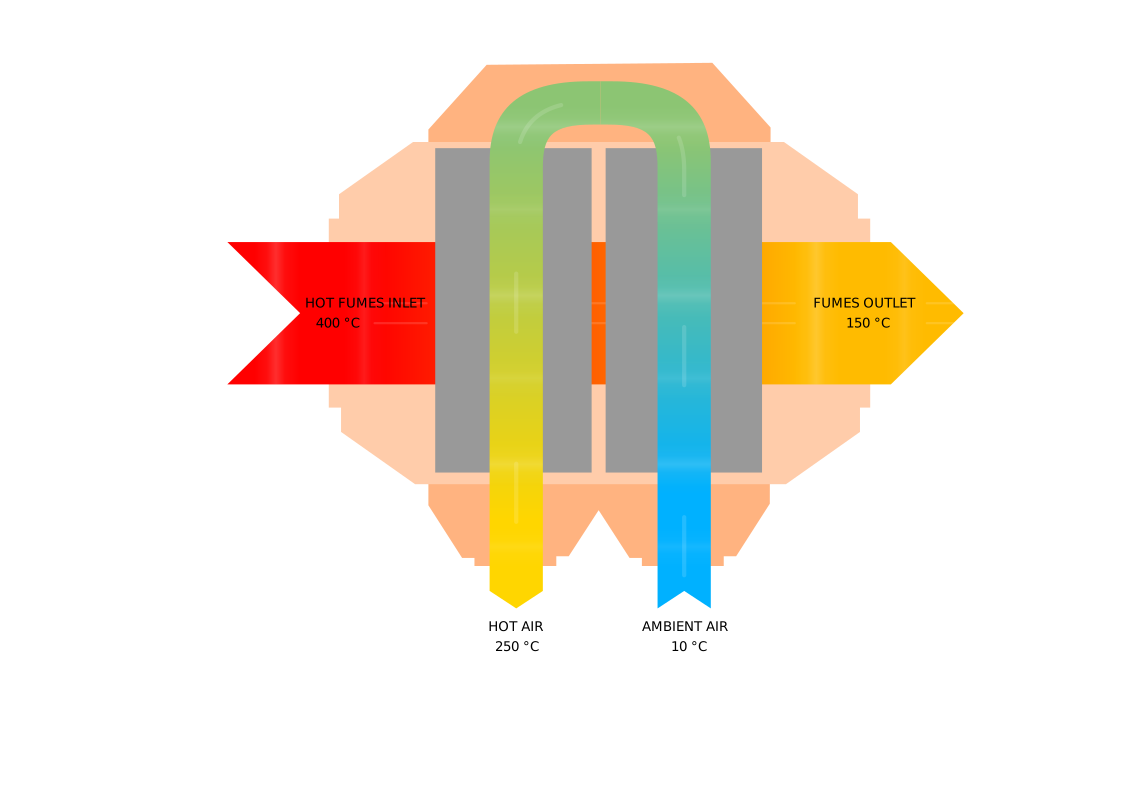
Gas-to-gas recuperators recover heat directly between exhaust air and fresh air or between two process gas streams, without an intermediate liquid circuit. Hot exhaust air flows around thin-walled smooth tubes, while colder fresh air flows inside the tubes and is pre-heated before returning to the process. The smooth tube design allows easy cleaning and makes the unit suitable for polluted gas streams. Stainless steel versions can be used where condensation or aggressive components are expected. Crossflow, counterflow or combined flow arrangements are available, with tight construction to separate both gas streams reliably.